05
Autonomous bartending robot
We built a first-place mechatronics competition prototype as a three-person team across autonomous navigation, sensing, and actuation.
- Role
- Robotics / embedded contributor
- Year
- 2026
- Discipline
- Robotics, embedded control
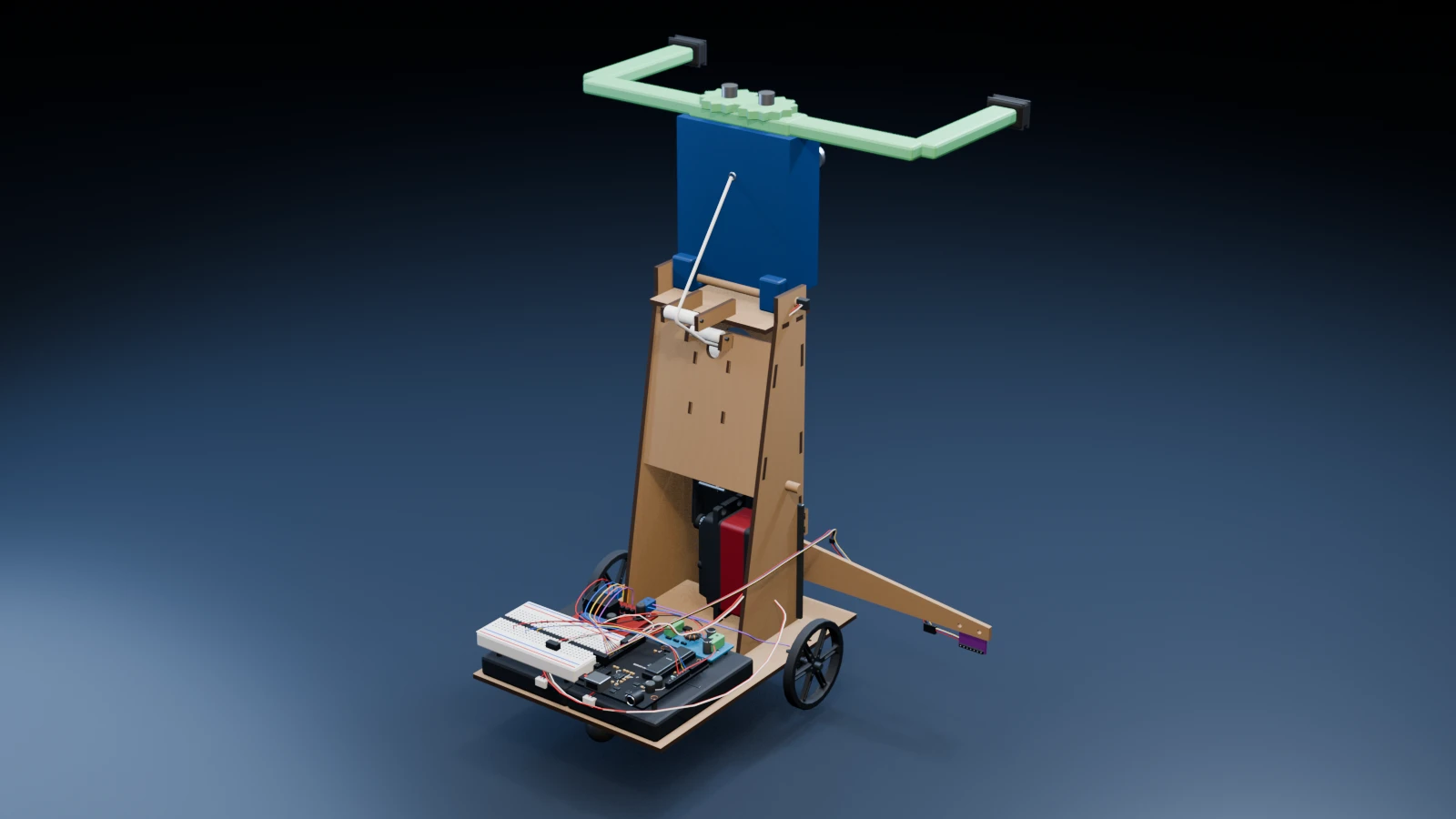
01 Overview
What we built
We built this three-person mechatronics course project for an autonomous competition run.
The robot
We built this with a three-person course team for a first-place mechatronics competition run. Our prototype combines autonomous line following, color sensing, and actuator control.
Our team combined a line-following chassis, color sensing, and actuator control into one competition prototype.
02 Challenge
The challenge
We balanced autonomous navigation, reliable sensing, and a constrained service interaction.
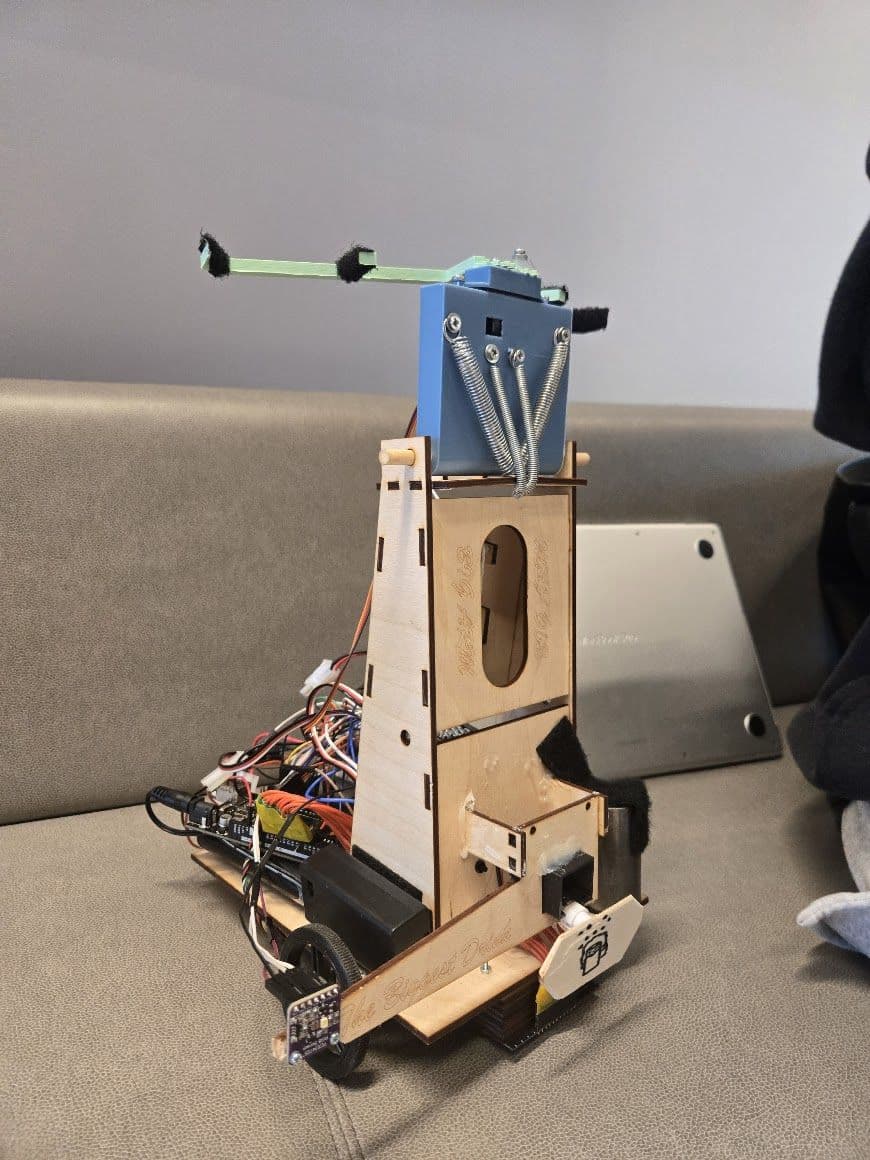
03 Process
How we integrated it
We iterated on the embedded control loop and physical integration around a repeatable test path.
Inside the full run
We connected the chassis, color sensor, line sensors, and serving actuator so we could test each subsystem inside the full run.
Our documented result is a course prototype and team contribution; first place in the competition is the clearest external outcome.
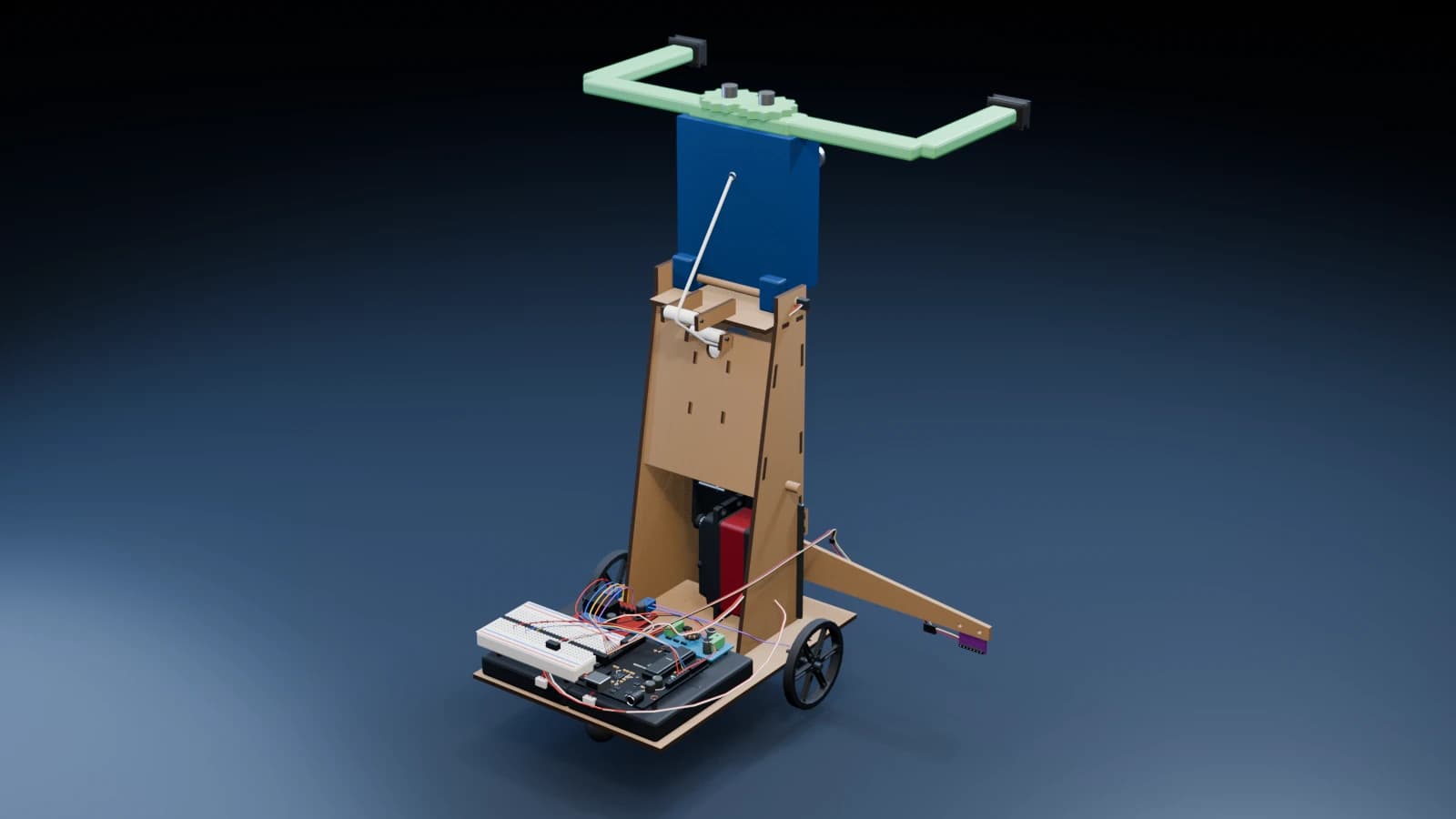
04 Outcome
The result
We earned first place in the documented mechatronics competition run.
What it shows
Our team had to make sensing, control, mechanics, and run-time behavior agree under competition constraints.
- Team
- Three-person course team
- Result
- First place
- Public source
- Bartending robot repository