
Sensors
Line sensors, light sensing, and color sensing provided the cues needed for navigation, clock-in behavior, and order recognition.
A first-place Santa Clara mechatronics robot built to navigate a winding course, clock in, read the order, pull the correct tap, and complete a controlled pour without overfilling. Our final run was the only perfect three-tap run in the competition.
The course rewarded reliability more than isolated subsystem performance. The robot had to stay on line, recognize the task, select the right tap, pull with enough force, avoid overfilling, and reset for the next action.
The robot had one minute to follow a winding course with enough stability to reach the bar, align with the taps, and keep its mechanism square to the target.
Light and color sensing helped the robot recognize course cues, clock in, and interpret which drink order needed to be served before actuating the tap.
A C++ state machine coordinated approach, alignment, arm positioning, tap pull timing, release, and reset so the robot could serve the correct tap.
PWM-controlled servos pulled the tap without overfilling, then returned the arm to neutral so the robot could continue through the run.
Line sensors, light sensing, and color sensing provided the cues needed for navigation, clock-in behavior, and order recognition.
The Mega ran the C++ state machine that decided when to follow the line, read the order, align to a tap, pull, reset, and continue.
PID control kept the robot centered through the winding course so the mechanical actuation sequence started from a repeatable position.
PWM drove the servo mechanism, including a high-torque base servo that pulled the top arm through a string linkage.
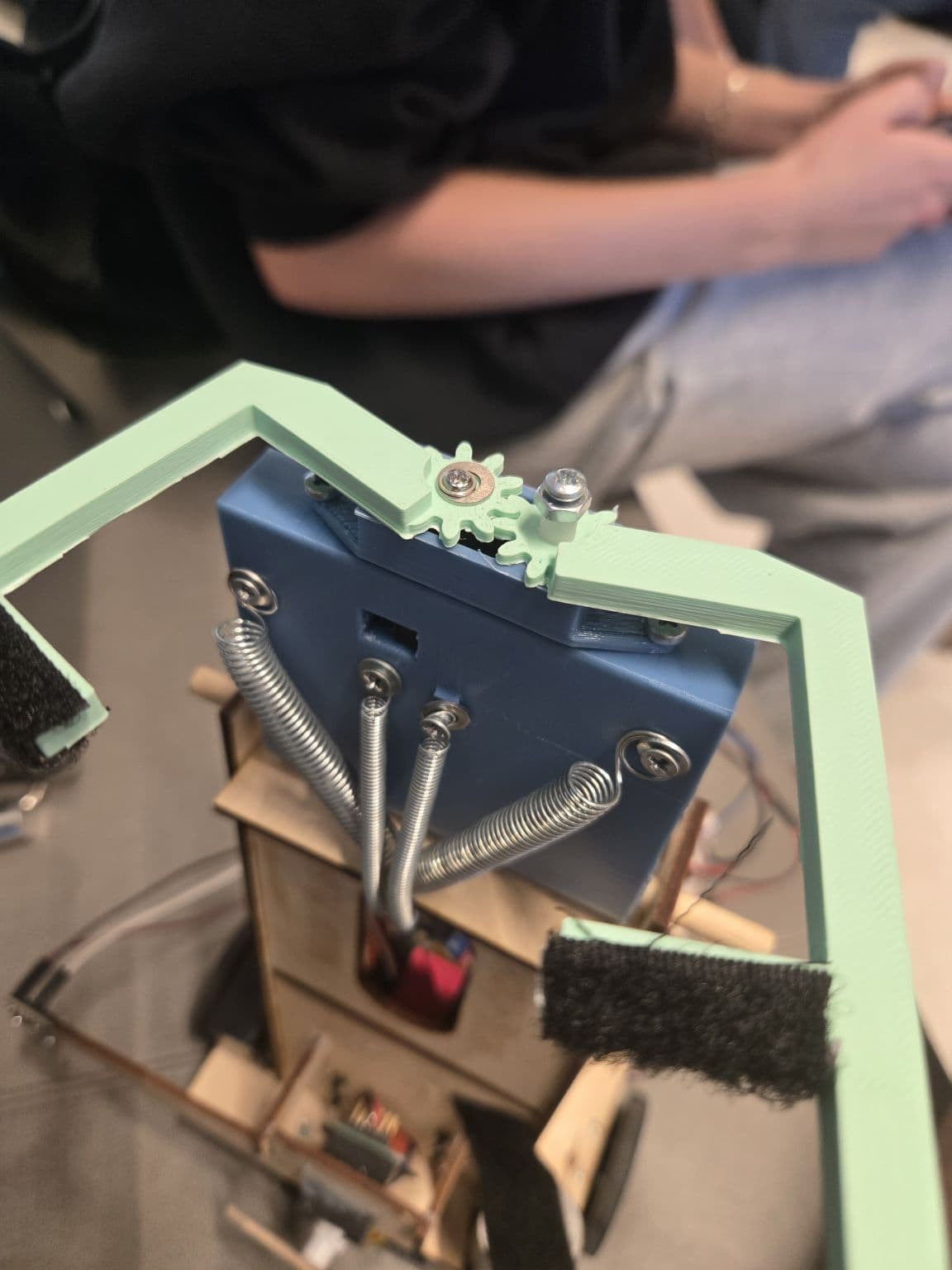
Laser-cut wood, 3D-printed arm geometry, claws, string tension, and springs worked together to pull the tap and return it cleanly.
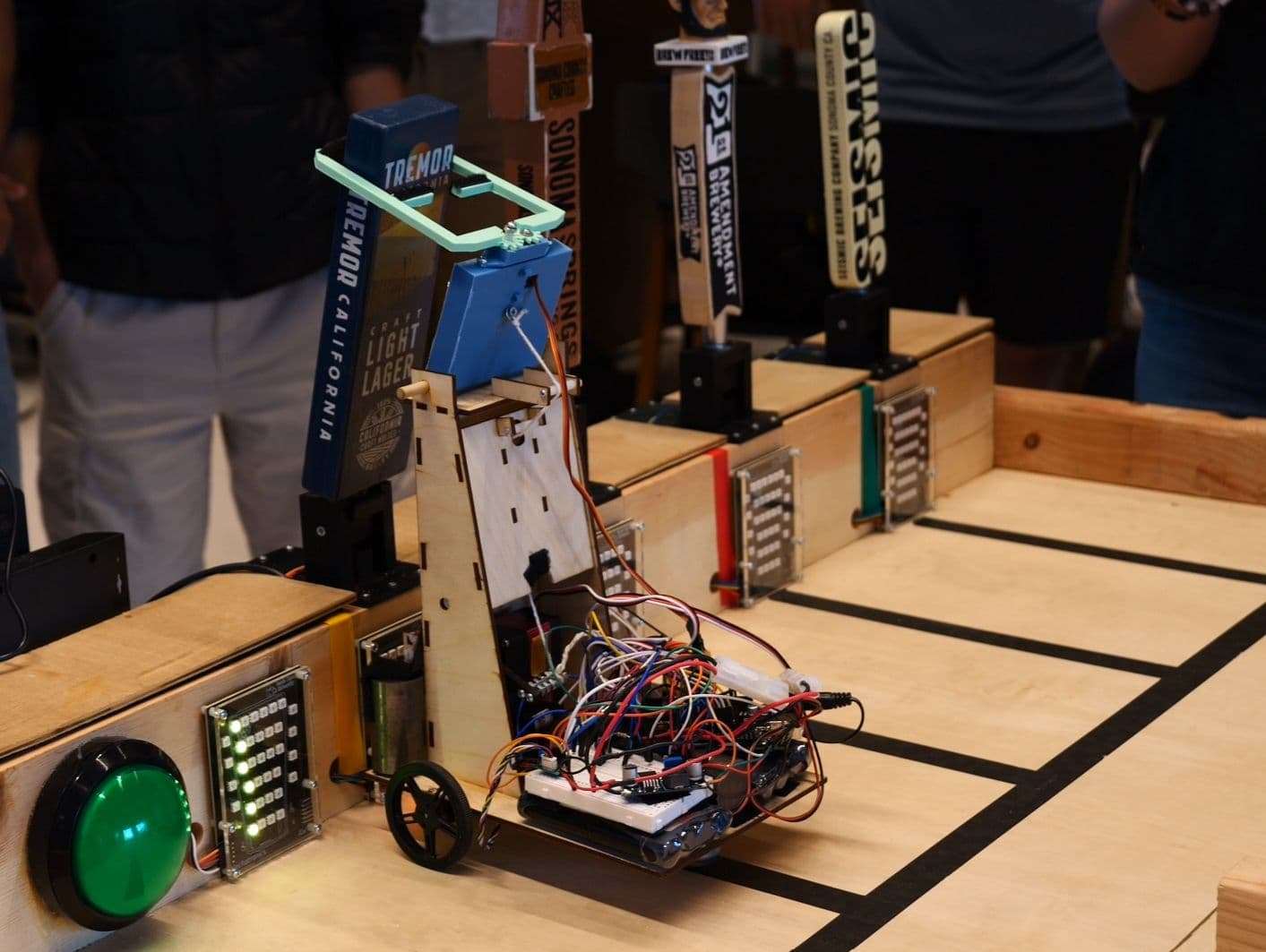
Fusion 360 was used to design the laser-cut frame and 3D-printed arm and claws. A high-torque 60kg servo at the base pulled the top arm and beer tap through a string linkage, while springs pushed the top arm back when the servo returned to neutral.
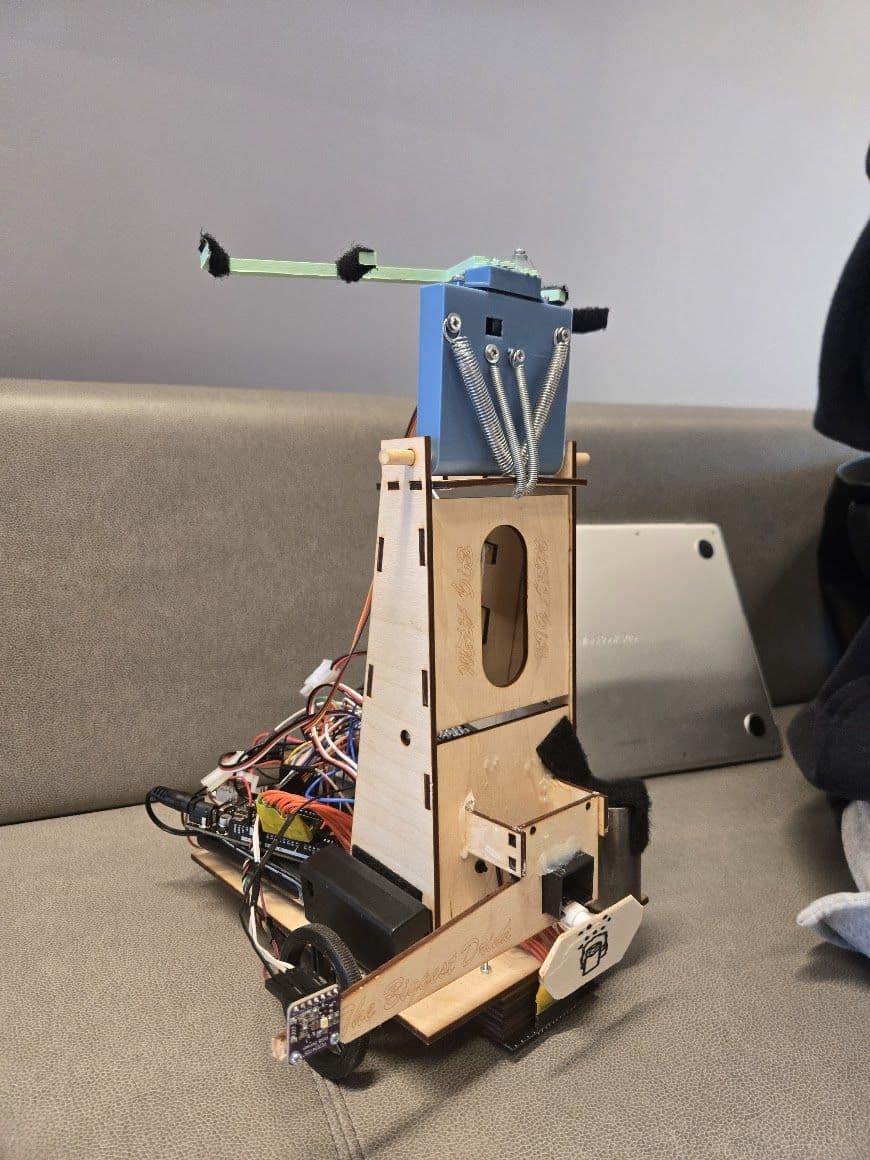
The team won first place and completed the only perfect run by successfully pulling three beer taps.
A state machine kept navigation, sensing, order handling, actuation, and reset behavior predictable under competition timing.
Fusion 360 parts, laser-cut wood, and 3D-printed arm/claw geometry turned a course robot into a task-specific machine.
The winning run depended on tuning software timing and mechanical return behavior together, not treating them as separate problems.